
Efficiency and reliability remain top priorities in modern electronics manufacturing. As devices become smaller and more complex, SMT assembly red glue plays a critical role in securing components during production. This epoxy adhesive prevents heavy or double-sided parts from shifting during reflow soldering. Consequently, it bridges the gap between intricate design requirements and manufacturing stability. Understanding this process helps procurement teams balance quality retention with production costs effectively.
Understanding the Red Glue Process in PCB Manufacturing
Red glue is typically a red-colored epoxy resin used as a temporary bonding agent for Surface-Mounted Devices (SMDs). Its primary function is maintaining component alignment throughout the assembly cycle. Furthermore, the distinctive red color serves a practical quality control purpose by allowing technicians to visually verify proper application instantly. Without this visual indicator, inspecting transparent adhesives would be significantly more difficult on high-density boards. Therefore, the color itself contributes directly to process reliability and defect detection rates.
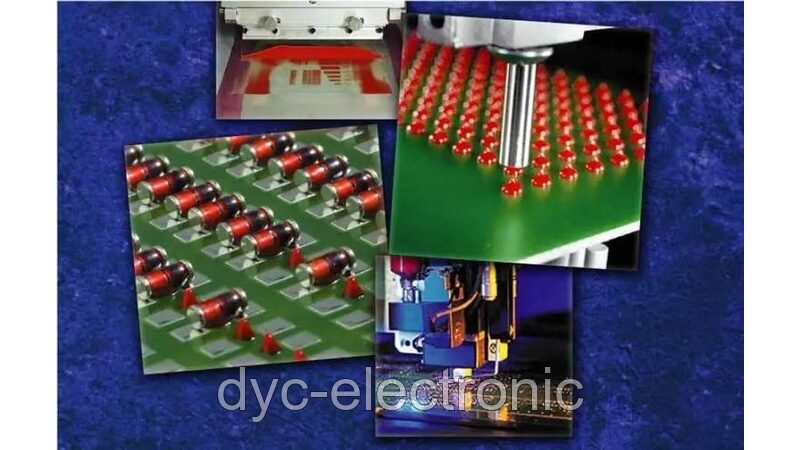
Business Value Insight: For buyers sourcing dual-sided boards, verifying red glue application protocols ensures that expensive components like transformers or large capacitors will not detach during the second reflow pass, preventing costly field failures and warranty claims.
Common Application Scenarios for Component Stabilization
Heavy Components on Dual-Sided Boards
Dual-sided PCBs often require two reflow cycles, creating significant risk for bottom-side components. During the second pass, gravity can cause heavy parts to shift or fall as solder paste re-melts. Specifically, large capacitors, inductors, crystals, and transformers benefit most from epoxy adhesive reinforcement. Thus, red glue acts as a mechanical anchor that preserves solder joint integrity under thermal stress.
High Vibration and Impact Resistance
Certain end-use environments subject electronics to severe mechanical stress throughout their operational life. For instance, ultrasonic soldering processes introduce high-frequency vibrations that may loosen poorly secured parts. Additionally, automotive or industrial applications demand extra mechanical stabilization beyond standard solder joints alone. In these cases, the adhesive provides essential shock absorption and long-term structural support.
Correcting Non-Uniform Flatness Issues
Variations in board warpage or component base flatness frequently lead to floating defects during reflow. Pre-fixing components with adhesive compensates for these physical irregularities before soldering begins. As a result, manufacturers avoid uneven lift that would otherwise create open circuits or weak connections. This corrective capability is especially valuable when dealing with mixed-supplier component batches.
Dispensing Methods for Precision Application
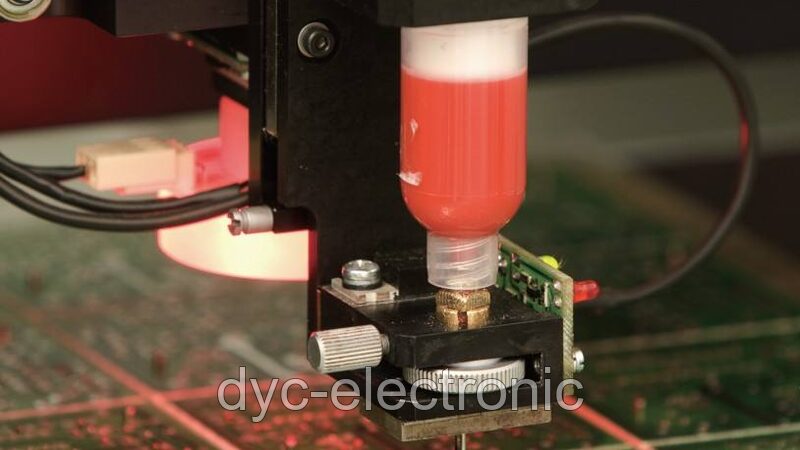
Selecting the appropriate dispensing method directly impacts both throughput and consistency. Manual dispensing suits low-volume prototypes where flexibility matters more than speed. Technicians can adjust glue volume per component based on real-time visual feedback. Conversely, semi-automatic dispensing machines excel in higher-volume production runs requiring repeatable precision. These systems optimize material usage while maintaining strict quality standards across thousands of placements. Ultimately, matching the method to your order volume prevents over-investment in automation or bottlenecks in manual labor. You can explore our comprehensive PCB Assembly Services to determine which approach fits your project specifications.
Overcoming Challenges and Cost Optimization Strategies
Despite its benefits, adding adhesive introduces process complexity and potential cost drivers. Improper amount or placement control can cause cold solder joints or misalignment issues. Moreover, additional curing steps extend lead times and increase direct labor expenses. However, strategic optimization minimizes these drawbacks without sacrificing reliability. According to IPC-A-610 standards, proper adhesive volume must be validated against component mass and pad geometry to ensure acceptable results.
Design-Level Prevention Tactics
Streamlining component placement reduces dependency on adhesive altogether. Engineers should keep heavy parts on one side whenever possible and position them near structurally robust board areas. Additionally, selecting components with flatter bases inherently minimizes shifting risks during thermal cycling. When feasible, substituting bulky SMDs with through-hole alternatives provides natural mechanical stability. These design choices address root causes rather than symptoms.
Smart Manufacturing Adjustments
Automated dispensing equipment eliminates waste and human error when adhesive use remains unavoidable. Collaborating early with experienced manufacturers enables layout reviews that minimize glue points through intelligent footprint design. Our SMT Assembly Process integrates such DFM feedback loops to reduce unnecessary process steps. By combining smart design with precise execution, teams achieve optimal cost-performance balance. Refer to technical resources like Henkel’s Electronic Adhesives Guide for material selection best practices.
Frequently Asked Questions About Red Glue
What is the primary purpose of SMT assembly red glue?
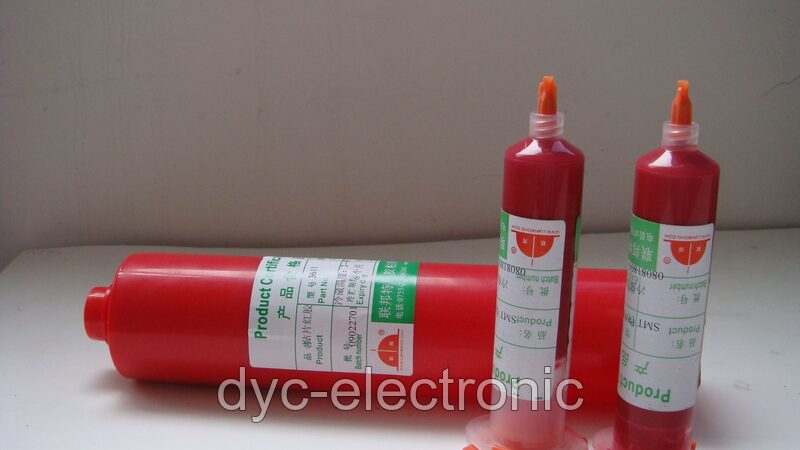
The main function of SMT assembly red glue is temporarily securing surface-mount components during reflow soldering. It prevents heavy or bottom-side parts from shifting due to gravity or vibration. This stabilization ensures reliable electrical connections and mechanical integrity throughout the assembly cycle.
Does using epoxy adhesive increase PCB manufacturing costs?
Yes, additional dispensing and curing steps add labor time and material expenses to production. However, optimized design and automated application can significantly offset these increases. Strategic use only where necessary prevents unnecessary cost inflation while maintaining reliability.
Can red glue be replaced entirely through better design?
In many cases, yes. Placing heavy components on a single side and choosing flat-base packages reduce adhesive dependency substantially. Through-hole alternatives also provide inherent stability for larger parts. Nevertheless, some complex dual-sided designs still require selective reinforcement for guaranteed yield.
Ready to optimize your next PCBA project? Contact our engineering team today for a free DFM review and competitive quote tailored to your volume and complexity requirements. We help you balance reliability with cost-efficiency from prototype through mass production.
 日本語
日本語  English
  Русский
  Français
  Deutsch
  한국어
한국어  Español
  Português
  العربية
  Türkçe
  Italiano
  Polski
  Dansk
Dansk