
A PCBA box build takes a finished circuit board and turns it into a product you can ship. Short answer: a box build — also called systems integration — mounts the PCBA in an enclosure, adds wiring, power, displays, and firmware, then runs a full functional test so the unit leaves the line ready to deploy. We run box assembly on the same floor as our SMT lines. That keeps accountability and traceability under one roof.
What Is a PCBA Box Build?
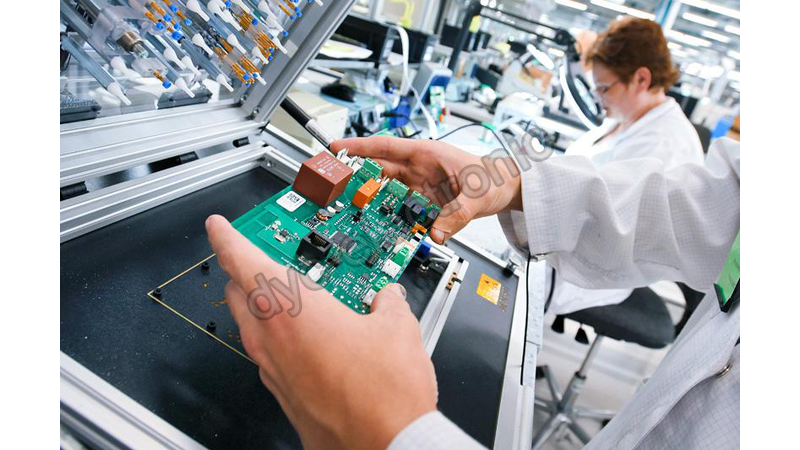
Short answer: a PCBA box build is the final integration step that converts a populated board into a complete, tested electronic product. PCBA stops at the board. Box build adds the enclosure, interconnects, and system-level verification that let the unit work on its own.
PCB assembly produces a bare functional board. Box build wraps that board into its operating environment. The environment is a metal or plastic housing, cable harnesses, a power supply, a display or HMI, switches, and any sub-assemblies. The output is not a component. It is a finished device your customer can power on.
Think of it as the difference between a circuit and a product. A board on the bench needs a bench. A box-built unit arrives with its housing. Its cables are dressed and secured. Its firmware is already loaded. Your receiving team only unpacks and installs it.
What a PCBA Box Build Includes
Short answer: a typical PCBA box build covers PCBA installation, enclosure mechanical assembly, wire harness routing, power and display integration, firmware loading, and final system test. Scope varies by product, so write the exact list into the quotation rather than assume it.
Buyers often underestimate how much value sits outside the board. The table below shows where PCBA-only work ends and box build begins.
| Scope element | PCBA only | PCBA box build |
| Populated, tested board | ✓ | ✓ |
| Enclosure & mechanicals | — | ✓ |
| Cable harness & wiring | Minimal | ✓ full harness |
| Power supply integration | — | ✓ |
| Display / HMI | — | ✓ |
| Firmware programming | Optional | Usually included |
| System-level functional test | — | ✓ |
| Labeling & final packaging | — | ✓ |
A box build can be a board in a case. It can also be a rack with several PCBAs, a wired backplane, and embedded software. You define the scope on the purchase order. The clearer you are, the fewer surprises appear at first article.
The PCBA Box Build Process in 6 Steps
Short answer: most PCBA box builds follow six stages — review, source, sub-assemble, integrate, test, and pack. Each stage has a defined output and a check point, which lets one supplier carry accountability from BOM to shipment.
- Requirements & BOM review — engineering checks drawings, BOM, and test specs for fit and manufacturability before we buy any part.
- Sourcing — we procure the enclosure, harness parts, and components on a turnkey basis, or kit your consigned material.
- Sub-assembly — we build and verify harnesses, brackets, and modules first, so integration never waits on a late piece.
- Integration — the PCBA mounts in the enclosure; cables route to plan; connectors seat with strain relief.
- System test — we run power-on, functional, and safety checks against your procedure, not a generic one.
- Label, pack, ship — we add serialization, clean the unit, pack it for protection, and dispatch it to your dock or end customer.
That sequence is why a single EMS partner shortens lead time. Sourcing, assembly, and test share one schedule. Three vendors negotiating handoffs is slower.
Standards That Govern a PCBA Box Build
Short answer: we judge PCBA box builds against IPC-A-630 for the box assembly, IPC-A-610 for PCBA acceptance, IPC/WHMA-A-620 for any wire harness, and J-STD-001 for soldered joints — all run under an ISO 9001 or IATF 16949 quality system.
A box build follows a stack of standards. Each governs a different layer. Naming the right class on the purchase order makes inspection repeatable between shops. The IPC family of standards sets the workmanship baselines we build to.
| Standard | Governs | Notes for buyers |
| IPC-A-630 | Box assembly / OEM build | The box-build workmanship reference |
| IPC-A-610 | PCBA acceptance | Class 1/2/3; your class drives inspection depth |
| IPC/WHMA-A-620 | Cable & wire harness | Now at Revision E; Class 2 most common, Class 3 for harsh use |
| J-STD-001 | Soldered electrical assemblies | Sets solder criteria; pairs with IPC-A-610 |
| ISO 9001 / IATF 16949 | Quality management system | IATF 16949 adds automotive-specific controls |
IPC/WHMA-A-620 is the only industry-consensus harness standard. It is now at Revision E. It sorts workmanship into three classes. Class 1 is general. Class 2 is dedicated service and the default. The third class covers harsh environments such as aerospace or life-support. Circuit Assembly explains the three classes in detail. State the class, or we assume Class 2.
Turnkey vs Consigned Box Build
Short answer: turnkey puts sourcing, assembly, test, and packaging under one supplier and one schedule; consigned keeps you in control of parts but splits accountability. Turnkey usually lowers total cost and risk once volume or complexity rises.
This is the decision most buyers face first. It shapes everything downstream. Your cash flow, your engineering load, and your field-failure exposure all depend on it. Neither model is universally right. The fit depends on your BOM stability and your sourcing bandwidth.
| Factor | Turnkey | Consigned |
| Component control | Supplier sources | You supply |
| Accountability | Single party | Split across vendors |
| Traceability | Continuous records | Broken at each handoff |
| Lead time | One internal schedule | Multiple vendor handoffs |
| Best for | Production, complex, regulated | Stable BOM, proprietary parts |
When you choose turnkey, the same team builds the board and owns the rest. That includes the packaging for shipping, the cost structure, and the incoming quality control — one quality system instead of three. For medical, industrial, or long-lifecycle products, that unbroken chain often requires a single accountable party.
How to Specify a PCBA Box Build RFQ
Short answer: send the BOM with approved substitutions, PCBA specs or files, enclosure CAD, harness drawings, firmware revision, test procedure, and quantities. The more of that package you provide up front, the tighter the quote and the fewer late changes.
A vague RFQ forces the supplier to guess. Guesses become change orders. Give them this set and the quotation becomes a contract instead of an estimate.
- BOM with approved manufacturer part numbers and alternates
- PCBA specification or Gerber / ODB++ / IPC-2581 files
- Enclosure drawings (CAD) with critical dimensions and material
- Wire harness drawings and routing notes
- Firmware file and the exact revision it must match
- Functional test procedure and acceptance criteria
- Volumes, target market, and delivery terms
Your packaging and shipping requirements belong here too. State moisture sensitivity, ESD level, and transit protection before we seal the unit. Do not state them after a return.
Common PCBA Box Build Mistakes
Short answer: the frequent failures are parts that pass alone but clash in the box, missing harness strain relief, an unspecified acceptance class, and test plans left for the supplier to invent. Catch these in the review stage, not at first article.
Most box-build defects are integration problems, not component problems. They appear only when discrete pieces meet inside the enclosure. That is exactly why the review step earns its keep.
- Unchecked enclosure clearances and PCB mounting points
- Wrong connector orientation or too-tight cable bend radius
- No named IPC class on the PO (we then assume Class 2)
- Firmware revision drifting from the BOM
- Test procedure supplied too late, after integration is done
A disciplined functional test plan written before integration catches most of these. We review fit, fastening, routing, and firmware revision at incoming and in-process gates. A clash then surfaces as a redline on a drawing. It is never a scratch on a finished unit.
FAQ
What does a box build include?
A box build installs populated PCBAs into an enclosure. It routes harnesses and integrates power supplies and displays. It loads firmware, runs a final functional test, and packs the unit. You set the exact scope on your quotation.
How is box build different from PCB assembly?
PCB assembly places components on a board and returns a functional PCBA. Box build takes that board and turns it into a finished product. It adds the housing, interconnects, and system-level test. PCBA builds the circuit; box build delivers the device.
What standards should my box build meet?
Expect IPC-A-630 for the box assembly and IPC-A-610 for PCBA acceptance. Add IPC/WHMA-A-620 (Revision E) for any harness and J-STD-001 for solder. All run under an ISO 9001 or IATF 16949 system. Name the IPC class on the PO.
Turnkey or consigned — which should I choose?
Pick turnkey when you lack sourcing bandwidth. Use it for high-mix volumes or regulated products. Consigned fits a BOM stable for over a year. It also fits when you must control proprietary or certified parts.
How long does a box build take?
Timeline follows BOM readiness and complexity. A ready BOM with qualified parts reaches first article in days to a few weeks. New enclosures, harness tooling, or test fixtures extend it. The clock starts when you release files and BOM, not when you sign the PO.
Can one supplier do PCBA and box build?
Yes, and it is usually the stronger option. One supplier running both stages keeps a single schedule. It keeps one quality system and full traceability from lot to finished unit. That removes handoffs that add lead time and split accountability.
The Bottom Line on PCBA Box Build
Short answer: a PCBA box build is where a board becomes a product — enclosure, wiring, firmware, and a verified functional test under one accountable supplier. Specify the scope, the IPC class, and the test procedure up front, and the build stays predictable from BOM to shipment.
We run PCBA and box build on one floor. Our line set includes 6 Yamaha YS SMT lines and 6 AOI units. We also run 2 DIP lines, 2 conformal-coating lines, and 2 final-assembly lines. All run under ERP-controlled material tracking. That means the same team made, tested, and documented the board your box build receives.
Ready to scope a build? Send your BOM, enclosure drawings, and test procedure to Spancer Huang. Reach him on WhatsApp at +86 15818610980 or email info@dyc-electronic.com. We return a quotation with DFM feedback, typically within one business day.
 Русский
 English
 Français
 Deutsch
 日本語
 한국어
 Español
 Português
 العربية
 Türkçe
 Italiano
 Polski
 Dansk