
Precision defines modern electronics manufacturing. Consequently, achieving reliable through-hole technology (THT) connections requires specialized tooling beyond basic soldering equipment. The wave soldering fixture design serves as the critical interface between the printed circuit board (PCB) and the molten solder wave. This component, often called a solder pallet, directly influences defect rates and production efficiency. Engineers must understand its function to optimize mixed-technology assembly processes effectively.
Importance of Wave Soldering Fixtures in PCB Assembly
These fixtures hold PCBs securely while selectively exposing specific areas to the solder wave. Such controlled exposure proves essential for boards combining surface-mount devices (SMDs) with THT components. Without proper shielding, delicate parts risk damage from unwanted solder contact or excessive heat. Furthermore, well-engineered wave soldering fixture design minimizes common faults like solder bridges and thermal stress. As a result, manufacturing yield increases significantly when precision tooling protects sensitive regions during the soldering cycle.
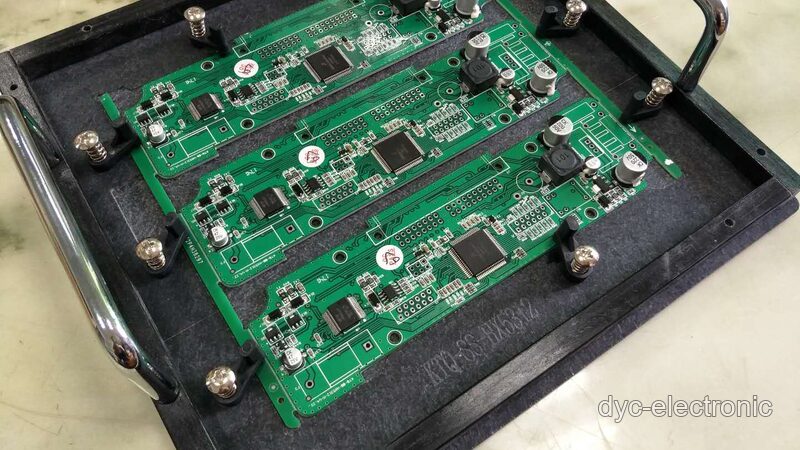
Business Value Highlight: Investing in precision fixture engineering reduces post-solder rework costs by up to 30%. Reliable tooling ensures consistent joint quality across high-volume production runs, directly protecting profit margins and brand reputation in competitive markets.
Core Principles of Wave Soldering Fixture Design
Successful tooling relies on four fundamental engineering rules. Adhering to these principles ensures both component safety and solder joint integrity throughout the assembly process.
Masking and Component Clearance
Designers must prioritize adequate clearance to prevent interference with the solder wave. Tall components like electrolytic capacitors require deeper pockets within the fixture to avoid direct exposure. Additionally, maintaining a 2-3mm clearance around critical parts safeguards them against accidental contact. This spacing also secures components firmly in place during the dynamic soldering process.
Secure Board Alignment
PCBs need firm attachment within the fixture to prevent misalignment during transit. Engineers typically incorporate alignment pins or edge rails matching the board’s reference points accurately. High-density layouts demand exceptional precision here to avoid costly soldering errors. Therefore, robust alignment mechanisms guarantee circuit functionality and repeatability across thousands of cycles.
Strategic Solder Wave Access
Cutouts must be positioned strategically where solder joints are required. Conversely, shielding areas should cover existing SMDs and pre-soldered components completely. This selective exposure ensures uniform wetting only at designated THT pads. Properly designed apertures facilitate consistent solder flow while preventing bridging on adjacent traces.
Stability and Durability Requirements
A flat base with even weight distribution prevents tipping or vibration on the conveyor system. Since fixtures undergo repeated thermal cycling, material selection must resist warping under mechanical stress. Durable construction extends the tooling lifecycle significantly. Ultimately, stability directly correlates with consistent solder joint quality and reduced maintenance downtime.
Material Selection for Solder Pallet Engineering
Material choice profoundly impacts performance, longevity, and overall project cost. Each option offers distinct advantages depending on the specific application requirements and budget constraints.
- ESD-Safe Composites: These materials offer superior thermal resistance and electrostatic discharge protection. They withstand temperatures up to 300°C, making them ideal for lead-free soldering operations.
- High-Temperature Plastics: Lightweight and cost-effective, these suit standard temperature profiles. However, they may lack the long-term durability of advanced composites.
- Aluminum: Known for exceptional strength, aluminum requires protective coatings to prevent solder adhesion. Its high thermal conductivity necessitates careful insulation to protect sensitive components.
- Ceramics: Although brittle and expensive, ceramics provide unmatched heat resistance for specialized high-temperature applications.
Thermal Management in Wave Soldering Fixture Design
Effective thermal control prevents board damage and ensures process reliability. Engineers must address four key thermal aspects during the design phase to maintain dimensional stability.
First, materials must resist deformation at typical lead-free process temperatures ranging from 240°C to 260°C. Second, appropriate insulation manages thermal conductivity to prevent unintended heat transfer to sensitive zones. Third, integrated ventilation channels promote even heat distribution and reduce localized hot spots. Finally, fixtures must tolerate gradual preheating without distorting to ensure reliable performance throughout the entire thermal profile.
Cost Optimization Strategies for Manufacturing Tooling
Balancing quality with budget requires strategic decision-making across several factors. Simplifying geometry without compromising function can significantly reduce machining expenses. Moreover, selecting composite materials often provides an optimal balance between performance and initial investment.
Production volume also dictates economic viability. High-volume runs justify investing in durable, premium materials despite higher upfront costs because they lower cost-per-unit over time. Additionally, designing for maximum reusability enhances total cost-efficiency. A well-maintained fixture spanning multiple production cycles delivers substantial long-term savings compared to disposable alternatives.
Best Practices in Precision Fixture Manufacturing
Achieving tight tolerances demands rigorous manufacturing protocols. Computer-Aided Design (CAD) combined with CNC machining ensures high accuracy and functional reliability. Proper material preparation and defect-free coatings further enhance durability in harsh soldering environments.
Crucially, prototype testing validates fit, alignment, and thermal performance before full-scale production. This verification step confirms that the wave soldering fixture design meets all technical specifications. Skipping validation risks costly failures during mass production. Therefore, systematic testing remains non-negotiable for professional PCBA services.
Business Value Highlight: Prototype validation prevents line stoppages caused by tooling defects. Spending two days on testing saves weeks of potential production delays and scrap costs, ensuring smooth ramp-up for new product introductions.
Troubleshooting Common Wave Soldering Challenges
Even with excellent tooling, specific issues may arise during production. Addressing these proactively ensures sustained manufacturing excellence and minimal disruption.
Preventing Solder Bridging
Accurate cutout dimensions are vital for avoiding shorts between adjacent pins. Simultaneously, controlling solder machine settings regulates flow dynamics effectively. Precise aperture engineering combined with optimized wave parameters eliminates most bridging defects.
Mitigating Thermal Warping
Using low thermal expansion materials minimizes dimensional changes during heating cycles. Homogeneous fixture designs also distribute heat evenly to reduce internal stresses. Consequently, this approach maintains alignment accuracy and prevents board distortion during cooling.
Managing Fixture Wear and Misalignment
Regular inspections identify wear patterns before they cause defects. Robust alignment features maintain efficacy despite prolonged mechanical stress. Scheduled maintenance programs extend tooling life and preserve solder joint consistency over extended production periods.
Elevating PCB Assembly Through Expert Tooling
Mastering wave soldering fixture design transforms PCB assembly outcomes for complex through-hole boards. Intelligent material selection, thermal management, and cost planning collectively boost soldering yield and reliability. Customized solutions address unique project challenges more effectively than generic approaches. By applying these engineering principles, manufacturers achieve consistent, high-quality results in every production run. For specialized support in optimizing your THT assembly process, explore our turnkey PCBA services or learn more about wave soldering fundamentals. According to industry standards outlined by IPC-A-610, proper tooling is foundational to electronic assembly acceptability.
 한국어
한국어  English
  Русский
  Français
  Deutsch
  日本語
日本語  Español
  Português
  العربية
  Türkçe
  Italiano
  Polski
  Dansk
Dansk