
A style number is a construction recipe, not a grade. UL Solutions says it certifies Appliance Wiring Material (AWM) to ANSI/UL 758 in the U.S., and that buyers can choose from more than 7,000 AWM styles defined by material, voltage, temperature, environmental exposure and flame ratings. That scale explains why a drawing names UL wire styles instead of a colour.
Even so, a reel can match a purchase order and still be wrong for the harness. We check UL wire styles at incoming inspection before anyone cuts a length, because the print line, the UL file number and the style page each answer a different question.
Here is the part most comparison articles skip. All four free UL iQ style pages we consulted for 1007, 1015, 1571 and 2464 carry the same notice: “This Style Page is no longer being updated. It is for historic reference only.” Read the print first. Then check the current record. Then re-qualify the crimp.
What UL Wire Styles Actually Specify
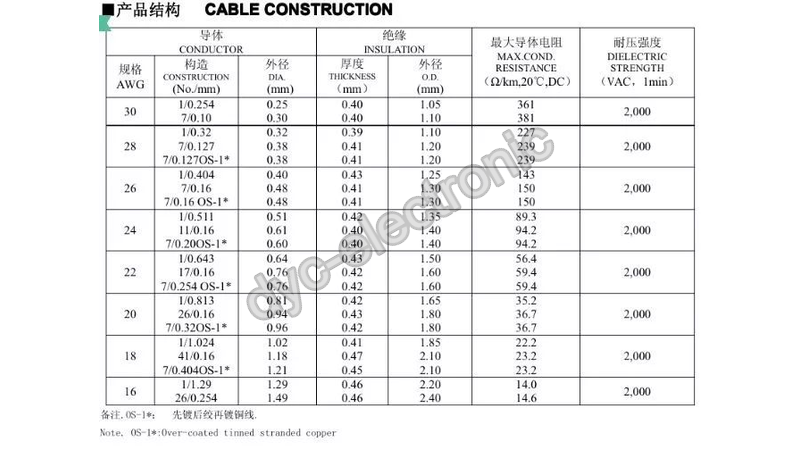
UL wire styles describe a construction, not a quality tier. Each style page fixes conductor size range, insulation material, minimum wall thickness, temperature, voltage and flame rating. UL tests AWM to ANSI/UL 758 in the U.S. and to CSA C22.2 No. 127 and No. 210 in Canada, so one reel can carry two different compliance stories. UL Solutions also describes AWM as a Recognized Component, which means the end product carries the final acceptance decision.
Style number ranges follow a pattern worth memorising. Styles 1000 to 1999 cover single-conductor thermoplastic wire, 2000 to 2999 cover multiconductor thermoplastic cable, 3000 to 3999 and 4000 to 4999 cover thermoset versions, and 5000 to 5999 cover specialty items. That split predicts the architecture before we open a datasheet. Styles 1007, 1015 and 1571 sit in the single-conductor group. Style 2464 sits in the multiconductor group. ANSI/UL 758 also regulates AWM marking and labeling, which is why the print line carries so much weight.
Two factories can build the same style to very different standards of care. We have rejected reels whose print looked right and whose insulation cracked on a simple mandrel bend. Our wire harness vs cable assembly page covers the wider assembly distinction. Workmanship is the narrower question. Did the reel match the construction on the drawing?
UL Wire Styles Start With the Print, Not the Purchase Order
Read the legend on the insulation. Compliant AWM marking carries the style number, the AWG, the temperature and voltage rating, and the manufacturer’s UL file number. Inspectors should match those four fields to the drawing before they measure anything. A purchase order that says “UL electronic wire” tells us nothing about the reel on the bench.
Next, verify that file number in UL Product iQ. UL Solutions describes Product iQ as the database holding current certification data for components, and its AWM listings appear under category codes AVLV2 for the U.S. and AVLV8 for Canada. Ask for a Certificate of Compliance naming the same file and style. Borrowed file numbers cause more trouble than wrong colours. Our incoming quality control process ties that check to the lot record.
Dual markings complicate the call. Plenty of stock now carries more than one callout, such as UL1007/1569 or an MTW-rated construction. If a drawing names one style, match that one. Inspectors read the legend, not the intent.
UL Wire Styles 1007 and 1015: The Wall Is the Difference
Insulation thickness separates them. The UL iQ page for Style 1007 lists 80 °C, 300 Vac, horizontal flame, 32 to 16 AWG solid or stranded, and extruded PVC at 15 mils minimum average thickness with 13 mils minimum at any point. The Style 1015 page lists 80, 90 or 105 °C, 600 Vac or 750 Vdc, conductors from 30 AWG to 2000 kcmil, and a wall starting at 30 mils minimum average for 30 to 9 AWG.
That thicker wall buys voltage and heat headroom, and it costs you diameter. On a panel with fifty conductors in one duct, the extra millimetres add up fast, and the bend radius grows with them. Swap 1007 for 1015 late in a project and you must recheck duct fill, sleeve ID and the terminal’s crimp range. We re-cut a first article inspection whenever the wire part number changes, even at the same AWG.
One detail buyers miss: 1015 permits three temperature grades. A drawing that calls out “UL1015, 105 °C” says more than one that calls out “UL1015” alone. Ask which grade the reel actually carries.
Where UL Wire Styles 1571 and 2464 Diverge
They solve opposite problems. The Style 1571 page lists 80 °C and 30 Vac with a 50 AWG minimum conductor, for internal wiring of Class 2 circuits in electronic equipment. Its insulation list runs well beyond plain PVC into SRPVC, foamed PVC and crosslinked variants, with 2 mils minimum thickness at any point and 100 mils maximum. Thin wall is common, not guaranteed.
The Style 2464 page describes a multi-conductor cable with a non-integral extruded PVC jacket, rated 80 °C and 300 Vac with a cable flame rating. UL iQ allows two or more singles, twisted pairs, mixed AWG sizes, an optional shield and an optional braid, while jacket thickness scales with cable diameter from 30 mils minimum average at 0.700 inch or less. Insulated conductors may follow a labeled AWM style or the manufacturer’s AWM Procedure.
So 2464 is a general-purpose AWM cable, not a fieldbus cable. If a protocol specifies impedance, capacitance or a named cable type, buy that cable instead. Floating drain wires do nothing. For low-frequency signals one grounded end usually avoids a ground loop, while higher-frequency noise often wants both ends bonded to chassis. Confirm that choice on the real assembly.

Why a Historic Style Page Cannot Release a Reel
All four UL iQ style pages we consulted carry the same notice. They are no longer updated, they exist for historic reference only, and each points readers to Product iQ for the current record. That caveat outranks any four-row comparison table circulating on a wire supplier blog. We have seen teams quote a style page from a slide deck and never open the live listing.
Second-hand summaries also disagree on wording. The style pages say horizontal flame for the single-conductor styles and cable flame for 2464, while many distributor spec sheets say VW-1 for both 1007 and 1015. We do not arbitrate that from a blog. Three records decide: the print, the current Product iQ listing and the supplier’s Certificate of Compliance.
Peak voltage markings cause the same confusion. The 1007 page allows a tag reading “600 V Peak – For Electronic Use Only”, and the 1015 page allows “2,500 V peak – for electronic use only”. Neither figure is the rated continuous voltage. Write the continuous rating into the drawing, then keep the tag wording out of the acceptance criteria.
UL Wire Styles Side by Side: Four Specs to Check
Four rows cover the reels we see most. Read across for the rating, the construction to confirm on arrival and the downstream item that a substitution breaks.
| Style | Rating on the historic UL iQ style page | Construction to confirm on the reel | What a substitution breaks |
| 1007 | 80 °C, 300 Vac, horizontal flame, 32-16 AWG | Extruded PVC, 15 mils min average, 13 mils min at any point | Crimp die setting, sleeve ID, duct fill |
| 1015 | 80, 90 or 105 °C, 600 Vac or 750 Vdc, 30 AWG-2000 kcmil | Extruded PVC, 30 mils min average at 30-9 AWG | Bend radius, terminal range, crimp first article |
| 1571 | 80 °C, 30 Vac, 50 AWG minimum, Class 2 circuits | PVC / SRPVC / XLPVC variants, 2 mils min at any point | Strip force, insulation damage, hipot limits |
| 2464 | 80 °C, 300 Vac, cable flame, two or more conductors | Extruded PVC jacket, optional shield and braid | Connector entry, drain termination, protocol cable type |
Source: UL iQ historic style pages for 1007, 1015, 1571 and 2464, within the ANSI/UL 758 framework described by UL Solutions. Treat these ratings as reference points only. Confirm every figure against the current Product iQ record, the reel print and the wire datasheet before release. Do not order from this table.
What UL Wire Styles Change Downstream
A wire part number is never a like-for-like swap. Wall thickness moves the finished diameter, which moves crimp height and pull force, sleeve ID, duct fill and the routing on the form board. Hipot settings follow the insulation rating and the customer specification, so our PCB testing methods page is only a starting point. We reissue the crimp first article, then repeat 100% continuity checking and the mechanical pull test.
Records matter as much as measurements. Automotive IATF 16949, aerospace AS9100 and industrial ISO 9001 programs expect the wire lot, style, file number and drawing revision to trace back to a finished assembly. DYC electronic builds cable and harness assemblies from 30 AWG to 4/0 AWG copper with PVC, XLPE, PUR, silicone and PTFE insulation options, and runs 100% continuity plus mechanical pull testing on finished assemblies. System integration follows the same discipline we describe in PCBA box build.
Ask three questions before you approve a substitution. Which file number sits on the reel, which temperature grade does it carry, and when did the last crimp first article run? Spancer Huang at info@dyc-electronic.com handles build reviews. Certificate numbers and factory photos stay as placeholders until someone supplies them.
Four Questions Buyers Ask About UL Wire Styles
Short ones, because most of the answers are no.
Is UL 1015 Just a Better UL 1007?
No. Both are single-conductor PVC constructions under UL 758, but they carry different voltage, temperature and wall requirements. A higher rating means a different construction, not better workmanship. Good 1007 beats sloppy 1015 on the bench.
Can UL Wire Styles 1007 and 1015 Share One Crimp Die?
Rarely at the same AWG. Finished diameter changes, so crimp height, insulation grip and pull force need a new first article. Reusing old die settings is the fastest route to a latent open.
Do I Need UL 2464 for a Fieldbus Run?
Not automatically. Style 2464 sets no characteristic impedance. Follow the protocol’s cable requirement first, then pick an AWM construction that satisfies it. Shield options do not turn a general-purpose cable into a bus cable.
How Do I Check a Supplier’s UL File Number?
Search the file number in UL Product iQ, confirm that the company name matches the factory, then confirm that the style, AWG range and ratings match the order. Ask for a Certificate of Compliance naming the same file. PDF certificates prove nothing on their own, since anyone can edit one.
The Print Decides
Actually, most wire disputes we see start with a drawing that named a style and a reel that almost matched it. UL wire styles give engineers a shared language for construction, but that language only works when someone reads the legend and opens the current record. Do it before the first cut and the four styles above stop being a memorisation exercise. We would rather spend ten minutes on a file number than rework a finished loom.
 Italiano
 English
 Русский
 Français
 Deutsch
 日本語
 한국어
 Español
 Português
 العربية
 Türkçe
 Polski
 Dansk