
Choosing the right Bluetooth WiFi module selection path determines whether your IoT product ships on schedule or stalls at certification. Too many engineering teams pick a component based on price alone, only to face coexistence failures or thermal shutdowns six months later. The correct approach follows a three-dimensional matching framework: power supply method, data throughput requirements, and deployment scenario. First, confirm whether a dual-mode combo is truly necessary. Then lock down protocol versions and certification grades. This guide walks you through every decision point with 2026 mainstream benchmarks to ensure your Bluetooth WiFi module selection aligns with both technical and commercial goals.
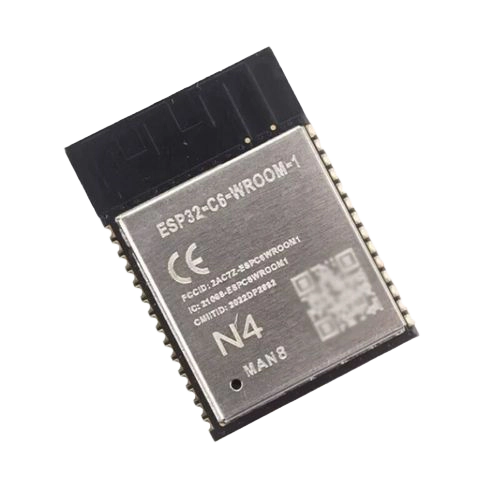
Step 1: Single-Mode or Dual-Mode in Bluetooth WiFi Module Selection?
Before comparing specs, answer one fundamental question: does your product actually need both radios in a single package? Getting this wrong during the Bluetooth WiFi module selection process wastes money or creates interference headaches.
Choose a Dual-Mode Combo Module When…
Your application must handle Bluetooth provisioning/control AND WiFi cloud upload/streaming simultaneously. Typical examples include:
- Smart home gateways that use BLE for device pairing and WiFi for cloud data relay.
- In-vehicle CarPlay head units requiring low-latency BT audio plus WiFi hotspot.
- Central control panels with BLE peripheral management and WiFi firmware OTA (Over-The-Air updates).
Additionally, combo modules suit designs where the main controller has limited resources. One integrated radio saves GPIO pins, reduces BOM (Bill of Materials) lines, and simplifies antenna routing.
However, you must verify one critical point before committing. Ask the vendor: does this module ship with a mature coexistence scheme? Look for time-division multiplexing (TDM) scheduling or frequency-band isolation mechanisms. Without proven coexistence firmware, simultaneous 2.4 GHz BLE and WiFi traffic causes dropped connections and audio stuttering. Always request actual coexistence test reports, not just marketing claims.
Business Value Highlight: Selecting a verified combo module with mature coexistence firmware reduces BOM costs by consolidating two radios into one. More importantly, it prevents costly post-launch firmware patches caused by RF interference, protecting your brand reputation and reducing warranty claims.
Choose Separate Modules When…
- Battery-powered endpoints (sensors, smart locks) need BLE only. Adding WiFi drains the coin cell in days.
- High-bandwidth devices (IP cameras, video doorbells) stream via WiFi alone. BLE adds no value here.
- Your system already has independent RF signal paths. A single combo chip introduces thermal coupling that degrades both radios.
Separate modules give you optimal antenna placement for each protocol and simplify thermal management in compact enclosures.
Key Selection Dimensions for Bluetooth WiFi Module Selection (2026 Benchmarks)
Once you determine single-mode versus combo, evaluate the module across six dimensions. The table below summarizes requirements for low-power and high-performance scenarios to streamline your Bluetooth WiFi module selection.
| Dimension | Low-Power (Battery / Wearable) | High-Performance (Mains / Gateway / Automotive) |
|---|---|---|
| Protocol Version | BLE 5.2+ / 5.4 (multi-link, LE Audio, enhanced security). Classic BT only if SPP audio peripherals are needed. | WiFi 6 (802.11ax) dual-band + BLE 5.4. Automotive projects mandate AEC-Q100 certified modules. |
| Frequency Band | 2.4 GHz single-band suffices. BLE does not depend on 5 GHz. | Dual-band (2.4 G + 5 G) mandatory to avoid congestion. Industrial wide-temp (−40 °C to +85 °C) preferred. |
| Interface | UART / SPI direct to MCU. Confirm 3.3 V logic levels. | SDIO for WiFi high-speed data; UART for BT control. On Linux platforms, verify PCIe / SDIO driver support. |
| Power Metrics | Sleep current ≤ 10 μA; advertising current ≤ 5 mA. Coin-cell runtime ≥ 6 months. | Standby ≤ 1 mA. Transmission current clearly stated in mA range. DTIM power-saving mode required. |
| Certification | Domestic SRRC + export CE / FCC. Medical or automotive adds industry-specific approvals. | Mandatory SRRC / CE / FCC. Industrial projects add IEC 62368. Automotive must pass AEC-Q100. |
| Antenna Design | PCB-embedded antenna (compact) or IPEX external connector (wall penetration / metal cavity). | External IPEX + shielding can. Multi-antenna MIMO modules require confirmed spatial isolation distance. |
Therefore, map your product into one column before requesting quotations. Mixing criteria across columns leads to over-engineering or performance gaps. For deeper insights on component reliability, refer to our guide on electronic component sourcing strategies.
Common Pitfalls in Bluetooth WiFi Module Selection to Avoid
Even experienced teams stumble on these issues. Review each one carefully during your Bluetooth WiFi module selection process to avoid costly redesigns.
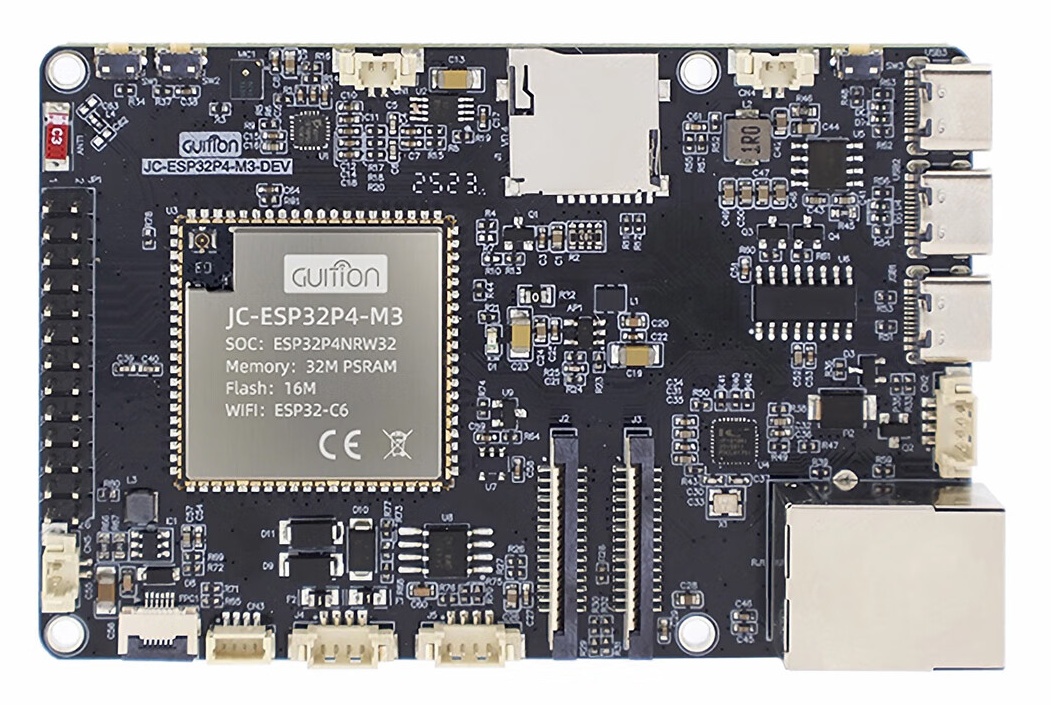
Pitfall 1 – Version Traps in Module Selection
BLE 6.0 modules carry significant price premiums, yet the supporting ecosystem remains immature in 2026. For new embedded projects, BLE 5.4 delivers sufficient capability at lower cost. Similarly, WiFi 7 modules target high-end routers and PC platforms only. For embedded terminals, WiFi 6 offers the best performance-to-price ratio. Do not pay next-generation premiums for features your product cannot exploit.
Pitfall 2 – Coexistence Risk Without Hardware Isolation
If a combo module lacks independent LNA (Low Noise Amplifier) / PA (Power Amplifier) paths, BLE packet loss spikes dramatically whenever WiFi transmits on the 2.4 GHz band. This failure mode appears only under real traffic loads, not in lab bench tests. Therefore, always request measured coexistence reports from the vendor before design-in. Verify the test conditions match your expected throughput profile.
Pitfall 3 – End-of-Life Chip Generations
Avoid modules built on discontinued or NRND (Not Recommended for New Designs) silicon. For instance, the QCA9377 is a WiFi 5 solution that should not enter new 2026 projects. Instead, prioritize mass-production-proven platforms:
- Espressif ESP32-C6 / C5: WiFi 6 + BLE 5.4, mature SDK.
- Telink TLSR9 series: Ultra-low-power BLE 5.4 with multi-link support.
- Feasycom FSC-BW256B: Stable combo module with full certification.
These platforms offer long-term supply commitments and active community support.
Business Value Highlight: Choosing mass-production-proven silicon like ESP32-C6 or Telink TLSR9 mitigates supply chain disruption risks. These platforms come with 5-year supply guarantees and active ecosystems, reducing R&D debugging time by up to 40% compared to niche or EOL chips.
Pitfall 4 – Incomplete Development Support
Before finalizing any dual-mode wireless SoC choice, audit the software ecosystem:
- SDK completeness: Provisioning, OTA, and Mesh code examples must be present.
- AT command documentation: Clear, version-controlled, and publicly accessible.
- Community activity: Active forums reduce debugging time for edge cases.
For industrial projects, demand a minimum 5-year supply guarantee in writing. Without these, your firmware team wastes weeks reverse-engineering undocumented registers. You can also explore our PCBA manufacturing services for integrated assembly support.
DIY Prototyping vs. Mass Production in Bluetooth WiFi Module Selection
Small-batch DIY builds can use ESP32-series SoCs directly on a custom PCB. This approach saves module cost during proof-of-concept. However, mass-production projects must select fully certified modular solutions with complete RF approvals. Bypassing modular certification exposes you to costly re-testing failures at the product level.
Furthermore, cross-validate driver compatibility with your main controller platform. Whether you run ARM Cortex-M, RISC-V, or Linux, confirm that SDIO, UART, or PCIe drivers exist and are maintained. A module with excellent RF specs becomes useless if the host driver drops packets under load.
How DYC Electronic Supports Your Bluetooth WiFi Module Selection
At DYC Electronic, we go beyond standard PCBA assembly. We source authenticated modules directly from authorized distributors, eliminating counterfeit risk. Additionally, we provide functional wireless testing and certification pre-checks during mass production.
Frequently Asked Questions About Bluetooth WiFi Module Selection
1.Do I really need a BLE WiFi combo module for a smart gateway?
Yes, in most cases. A smart gateway typically handles BLE device pairing and WiFi cloud communication simultaneously. A combo module reduces BOM cost and board space. However, verify the vendor provides proven time-division scheduling or band-isolation firmware. Without it, simultaneous 2.4 GHz traffic causes BLE packet loss and connection drops.
2.What is the minimum sleep current for a BLE sensor lasting six months on a coin cell?
Target sleep current ≤ 10 μA and advertising current ≤ 5 mA. At these levels, a CR2032 coin cell sustains operation for six months or longer. Also confirm the module supports configurable advertising intervals to further reduce average power draw.
3.Should I choose WiFi 6 or WiFi 7 for an embedded IoT product in 2026?
WiFi 6 (802.11ax) is the optimal choice for embedded terminals. It provides dual-band operation, OFDMA efficiency, and broad certification coverage. WiFi 7 modules remain expensive and target high-end routers or PC platforms. For cost-sensitive IoT deployments, WiFi 6 delivers the best performance-to-price ratio with mature ecosystem support.
4.How do I avoid coexistence problems in a dual-band combo module?
Select modules with independent LNA and PA paths for BLE and WiFi. Request real-world coexistence test reports showing packet-loss rates under simultaneous 2.4 GHz load. If the vendor cannot provide these, consider separate modules with dedicated antenna paths to eliminate thermal coupling and interference entirely.
5.What certifications are mandatory for an industrial BLE WiFi product sold in Europe and China?
You need CE RED for Europe and SRRC for China. Industrial applications additionally require IEC 62368 safety compliance. If the product enters automotive supply chains, AEC-Q100 qualification is mandatory. Always confirm that the module itself carries modular approvals to simplify end-product testing. Refer to the IEC 62368-1 safety standard for detailed compliance requirements.
6.Can I use an ESP32 SoC directly for mass production without a pre-certified module?
For small-batch DIY or prototyping, yes. For mass production, choose a pre-certified module. Using a bare SoC requires full RF certification at the product level, which adds cost and timeline risk. Pre-certified modules transfer radio approvals to your end product, significantly reducing regulatory burden. For more on regulatory testing, see the FCC modular approval guidance.
 Italiano
  English
  Русский
  Français
  Deutsch
  日本語
日本語  한국어
한국어  Español
  Português
  العربية
  Türkçe
  Polski
  Dansk
Dansk